Custom flat profiles
Brackets, plates, tabs, gussets, panels, mounting parts and custom two-dimensional shapes.
Turn CAD files, production drawings, sketches and replacement-part requirements into fiber-laser-cut sheet-metal components for prototypes, custom equipment, fixtures, assemblies and short production runs.
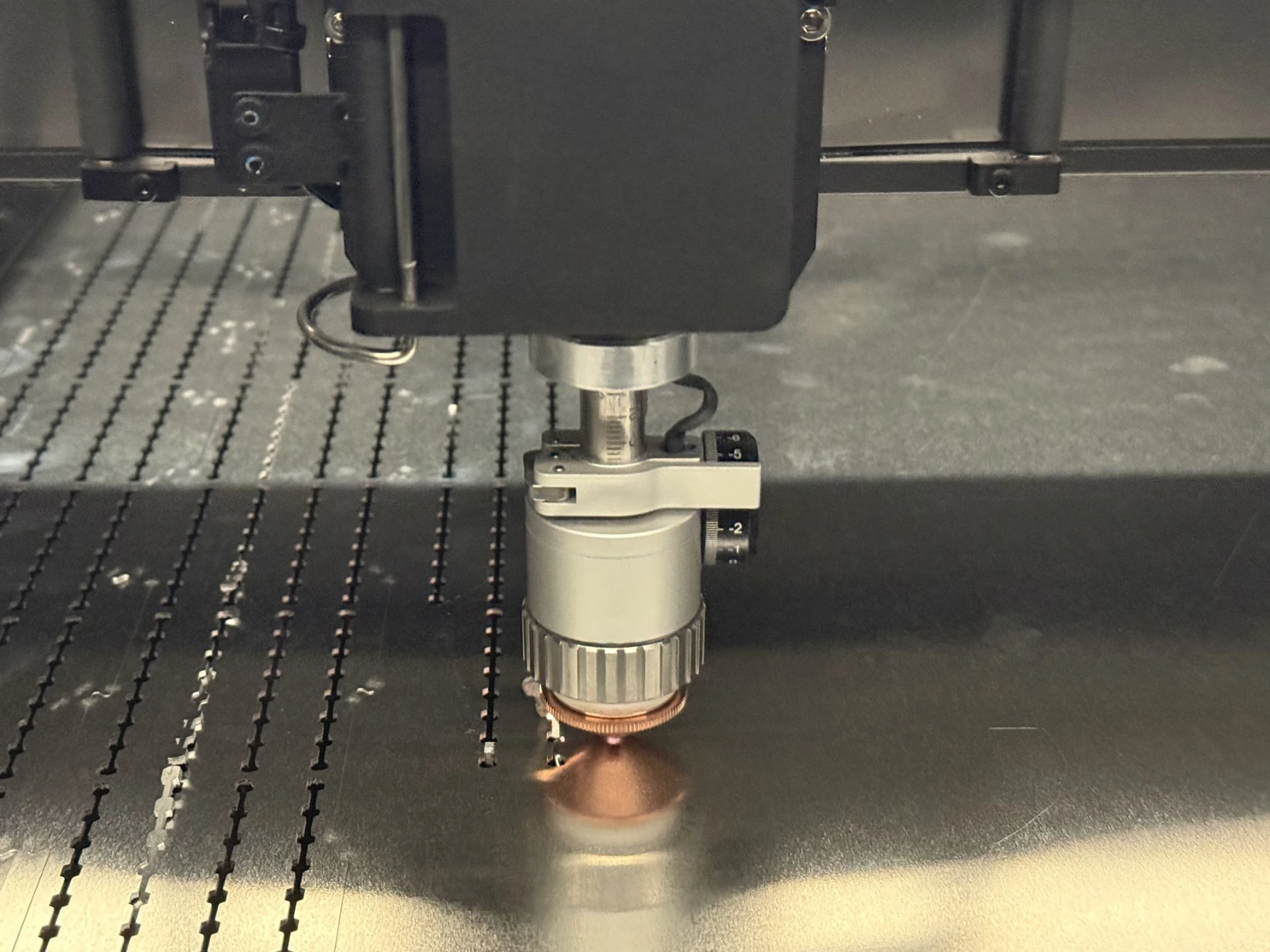
Custom fiber laser cutting
Fiber laser cutting is suited to custom metal components that need precise profiles, repeatable geometry and clean, narrow cut paths. It can reduce manual layout and secondary cutting compared with conventional fabrication methods.
865FabLab can review completed production files or help identify the information needed to prepare a concept for manufacturing. Projects may include individual components, prototypes, replacement parts, matching sets or repeat short-run orders.
Produce complex outlines and internal geometry directly from approved digital files.
Add repeatable holes, slots, tabs and alignment features during the cutting operation.
Continue into forming, welding, machining, finishing or assembly when the project requires more than flat parts.
Fiber laser cutting capabilities
Final feasibility depends on the metal, grade, thickness, geometry, tolerance, edge requirements and available stock.
Brackets, plates, tabs, gussets, panels, mounting parts and custom two-dimensional shapes.
Openings, access features, clearance areas and nested internal geometry within compatible parts.
Mounting holes, alignment slots, hardware clearances and production features subject to material review.
First articles and functional test parts for fit, assembly, design validation and production planning.
Reproduce suitable flat metal components from files, measurements, drawings or physical samples.
Produce consistent batches after the design, material and fabrication requirements are approved.
Coordinate part numbering, labeling, grouping and packaging for kits or downstream assembly.
Review bending, welding, drilling, tapping, machining and assembly requirements with the cut part.
Prepare compatible projects for raw use, paint, powder coating or another specified finish.
Materials for fiber laser cutting
Submit the preferred grade and thickness when known. Material availability and machine compatibility are confirmed during review.
A cost-effective option for brackets, frames, machinery parts, fixtures, supports and general fabricated components.
Common fabrication metalSuitable for corrosion-resistant, architectural, industrial, hospitality and appearance-sensitive parts.
Corrosion resistantA lightweight option for panels, enclosures, fixtures, brackets, portable equipment and product components.
LightweightSelected grades and nonferrous metals may be reviewed according to thickness, geometry and project requirements.
Review requiredQuote and file requirements
| Geometry | DXF, DWG, STEP, CAD, production-ready vector artwork, dimensioned drawing or physical sample |
|---|---|
| Material | Metal type, grade, thickness and whether customer-supplied material is being considered |
| Dimensions | Overall size, critical dimensions, hole sizes, internal features and mating conditions |
| Tolerance | General tolerance and dimensions that affect fit, alignment or downstream assembly |
| Edge requirements | As-cut condition, edge cleanup, deburring or another defined surface requirement |
| Secondary work | Bending, welding, drilling, tapping, machining, hardware, finishing or assembly |
| Quantity | Prototype, one-off replacement, matching set or repeat short-run production |
| Delivery | Local pickup, parcel shipment, freight, individual kits or delivery to another fabricator |
Common applications
Plates, brackets, guards, covers, spacers, supports and replacement components.
Flat patterns, access panels, faceplates, mounting panels and parts prepared for forming.
Alignment parts, locating plates, templates, production aids and workstation components.
Tabs, gussets, plates and joining parts prepared for welded structures.
Decorative panels, screens, trim components, mounting plates and installation details.
Bases, brackets, shelves, supports, display structures and branded metal elements.
Functional prototypes, first articles and test components for design refinement.
Custom panels, tabs, mounting parts and suitable replacement components.
Repeat batches of approved parts grouped, labeled and packaged for deployment or assembly.
Why fiber laser cutting?
Produce profiles and internal features that would be difficult or time-consuming to lay out manually.
Use approved digital geometry to produce matching parts and repeat future batches.
Cut features directly from production files instead of marking each component by hand.
Arrange compatible parts to use sheet material effectively and support batch production.
Include tabs, slots, alignment features and hardware clearances for downstream fabrication.
Continue from flat cut parts into forming, welding, finishing and assembly.
Fiber laser project process
Provide files, material, thickness, quantity, finish and delivery requirements.
Confirm scale, cut paths, critical dimensions and material compatibility.
Resolve open questions and confirm the production scope.
Nest and process the approved geometry in the selected metal.
Deburr, form, weld, drill, tap, finish or assemble as specified.
Review, label, package and prepare the order for pickup or shipment.
Ready to price your parts?
Clear drawings and complete project information help the team review feasibility and prepare an accurate quote.
Fiber laser cutting FAQs
Exact capabilities depend on the material, thickness, geometry, feature size, tolerance and requested finish.
Discuss Your PartContact 865FabLab
Send your CAD file, drawing, material, thickness, quantity and required completion date to begin a project review.