| Maximum sheet size | Approximately 48″ × 96″, or 122 × 244 cm |
|---|---|
| Maximum draw depth | Up to approximately 22″, depending on geometry and material |
| Material thickness | Up to approximately ¼″, depending on the plastic and part design |
| Heating | Infrared radiant heating with adjustable percentage control |
| Vacuum system | High-volume vacuum with onboard surge-tank support |
| Clamping | Adjustable pneumatic clamping frame |
Vacuum forming and thermoforming in Powell, Tennessee
Turn flat plastic sheets into custom housings, trays, covers, displays and formed parts.
865FabLab combines large-format vacuum forming, tooling support, controlled heating, high-vacuum performance, trimming, and secondary fabrication for prototypes, custom one-offs, and production runs.
Tooling assistance, customer-supplied molds, prototype forming, production runs, Powell pickup, and nationwide shipping.

Large-format sheet forming
Up to 48″ × 96″ sheets, approximately 22″ draw depth,
tooling support, trimming, and secondary fabrication.
48″ × 96″
Maximum supported sheet size
Up to 22″
Approximate maximum draw depth
Up to ¼″
Supported sheet gauge, material dependent
Tooling support
Molds, plugs, venting, and plug assists
Custom plastic forming
A practical path from flat thermoplastic sheet to finished three-dimensional part.
Vacuum forming heats a thermoplastic sheet until it becomes formable, then draws it over or into a tool using vacuum pressure. The result can be a lightweight cover, enclosure, tray, shell, display element, packaging insert, or decorative component.
Projects can begin with a CAD model, drawing, sample part, customer-supplied mold, or early concept requiring tooling and material guidance.
Develop prototypes, one-off formed parts, or repeat production runs.
Combine forming with tooling, trimming, CNC routing, drilling, assembly, and finishing.
Select material, gauge, draft, venting, draw depth, and tooling around the intended use.
Forming capabilities
Heating, vacuum control, tooling, trimming, and finishing in one project workflow.
Sheet-fed vacuum forming
Form compatible thermoplastic sheets over male or female
tooling.
Deep and moderate draws
Form contoured parts with depths up to approximately
22 inches, subject to design.
Controlled infrared heating
Adjustable radiant heat supports more consistent sheet
preparation.
High-volume vacuum
Surge-tank-supported vacuum performance helps create
stable, repeatable forming.
Pneumatic clamping
Adjustable frames and controlled clamping support sheet
sealing and handling.
Plug-assist forming
Tooling strategies can improve material distribution on
deeper or more complex draws.
Venting and draft planning
Tool details help air evacuate and allow formed parts to
release cleanly.
CNC trimming
Formed parts can be trimmed, drilled, routed, and finished
to final geometry.
Prototype and production runs
Support for early validation, custom parts, and repeatable
batch production.
Typical specifications
Planning information for formed plastic parts and tooling.
- CAD file, drawing, sketch, sample, or reference images
- Part dimensions and required quantity
- Preferred material and thickness, when known
- Indoor, outdoor, heat, impact, or appearance requirements
- Existing tooling details or tooling-development needs
- Trim lines, mounting points, holes, flanges, or assembly needs
- Desired deadline and shipping destination
Thermoplastic materials
Material selection based on impact, appearance, clarity, forming behavior, and end use.
Common formed plastics
- ABS for housings, covers, and durable formed parts
- HIPS for prototypes, displays, packaging, and economical parts
- PETG for clear or translucent formed components
- Acrylic for suitable visual and display applications
- PVC for compatible specialty forming applications
Specialty material options
- Kydex and similar specialty thermoplastic sheets
- Textured, colored, clear, or prefinished materials
- Pretreated or dried sheets where material requires it
- Customer-supplied sheets, subject to compatibility review
- Material gauges selected around draw depth and geometry
Final wall thickness changes as the heated sheet stretches
across the tool. Material, gauge, draw ratio, draft, radius,
plug-assist strategy, and part geometry should be reviewed
together.
Need help choosing a plastic? View material options .
Tooling and secondary processing
Support for molds, plugs, trimming, assembly, and finished-part preparation.
Molds, plugs, and forming aids
- Customer-supplied molds and plugs
- In-house tooling design support
- Male or female tool strategies
- Plug assists for deeper or more demanding draws
- Draft-angle and corner-radius review
- Vacuum venting and tool-deck planning
Trimming and finishing
- Flange trimming and perimeter cutting
- CNC routing and profile trimming
- Drilling, slots, openings, and mounting holes
- Edge cleanup and secondary finishing
- Assembly with fabricated or printed components
- Protective packing for pickup or shipment
Ideal applications
Formed plastic components for products, packaging, displays, and architectural environments.

Enclosures and housings
Protective covers, electronics housings, equipment shrouds, machine covers, and custom shells.
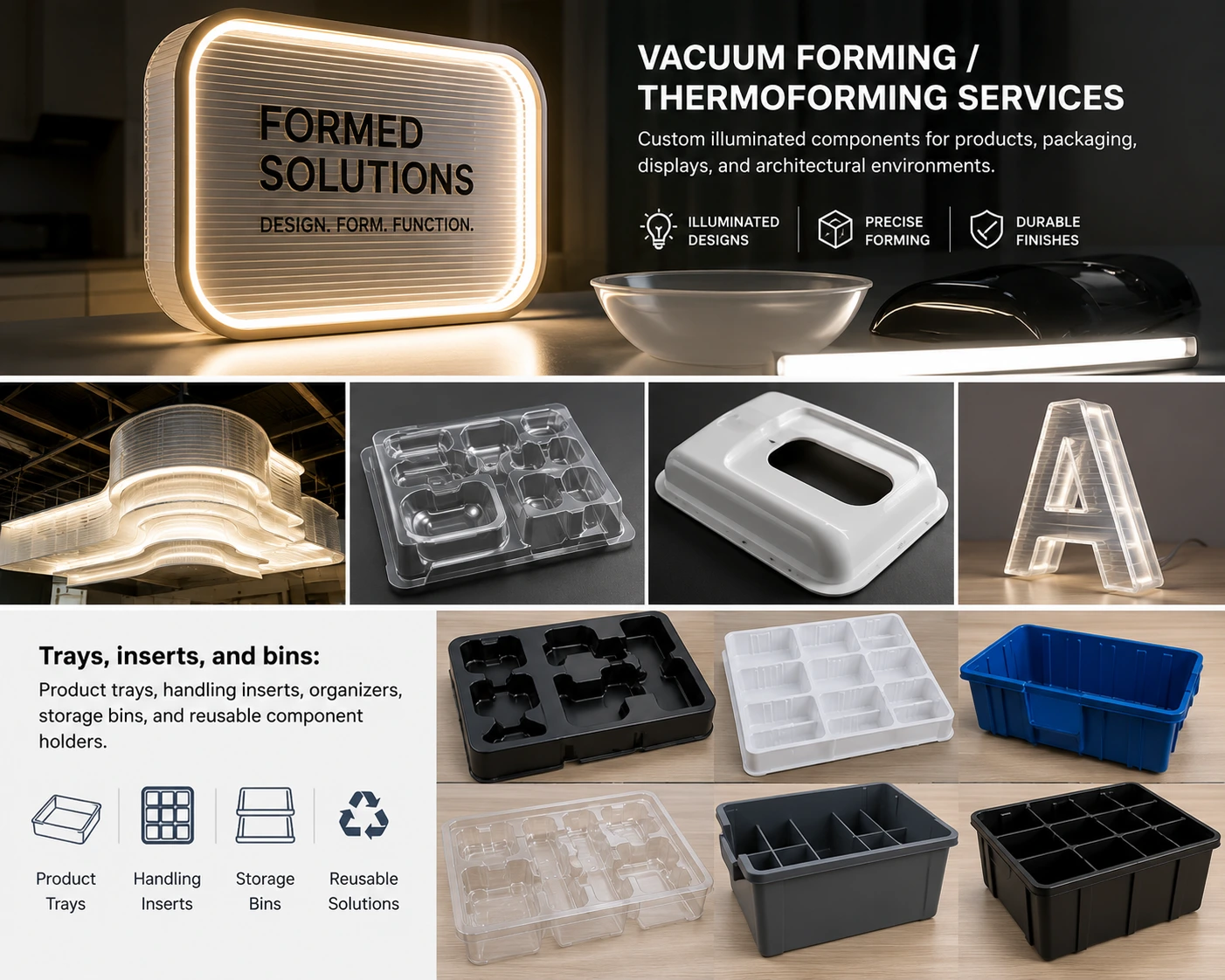
Trays, inserts, and bins
Product trays, handling inserts, organizers, storage bins, and reusable component holders.
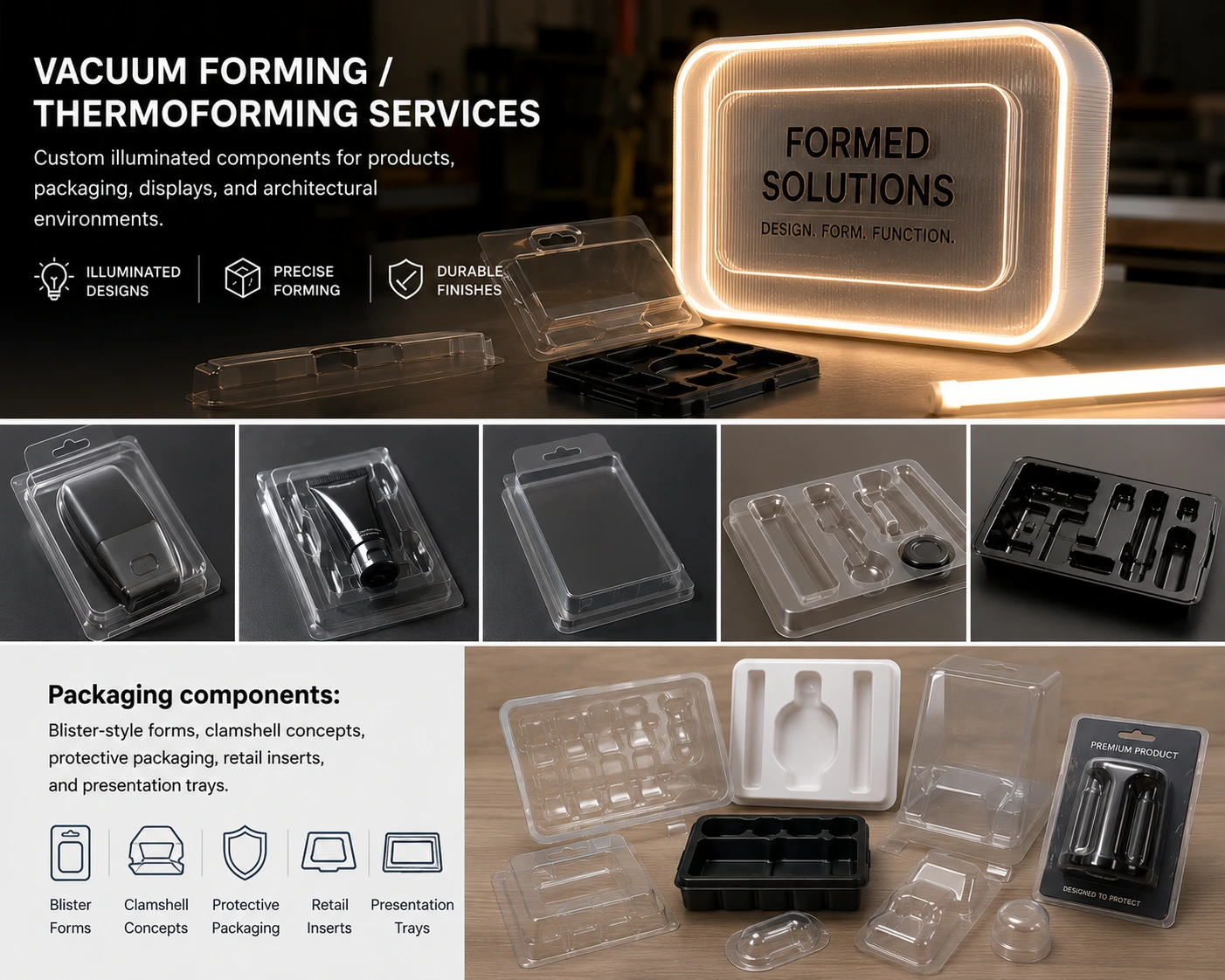
Packaging components
Blister-style forms, clamshell concepts, protective packaging, retail inserts, and presentation trays.

Retail display shells
POP display covers, dimensional shells, product surrounds, branded forms, and merchandising components.
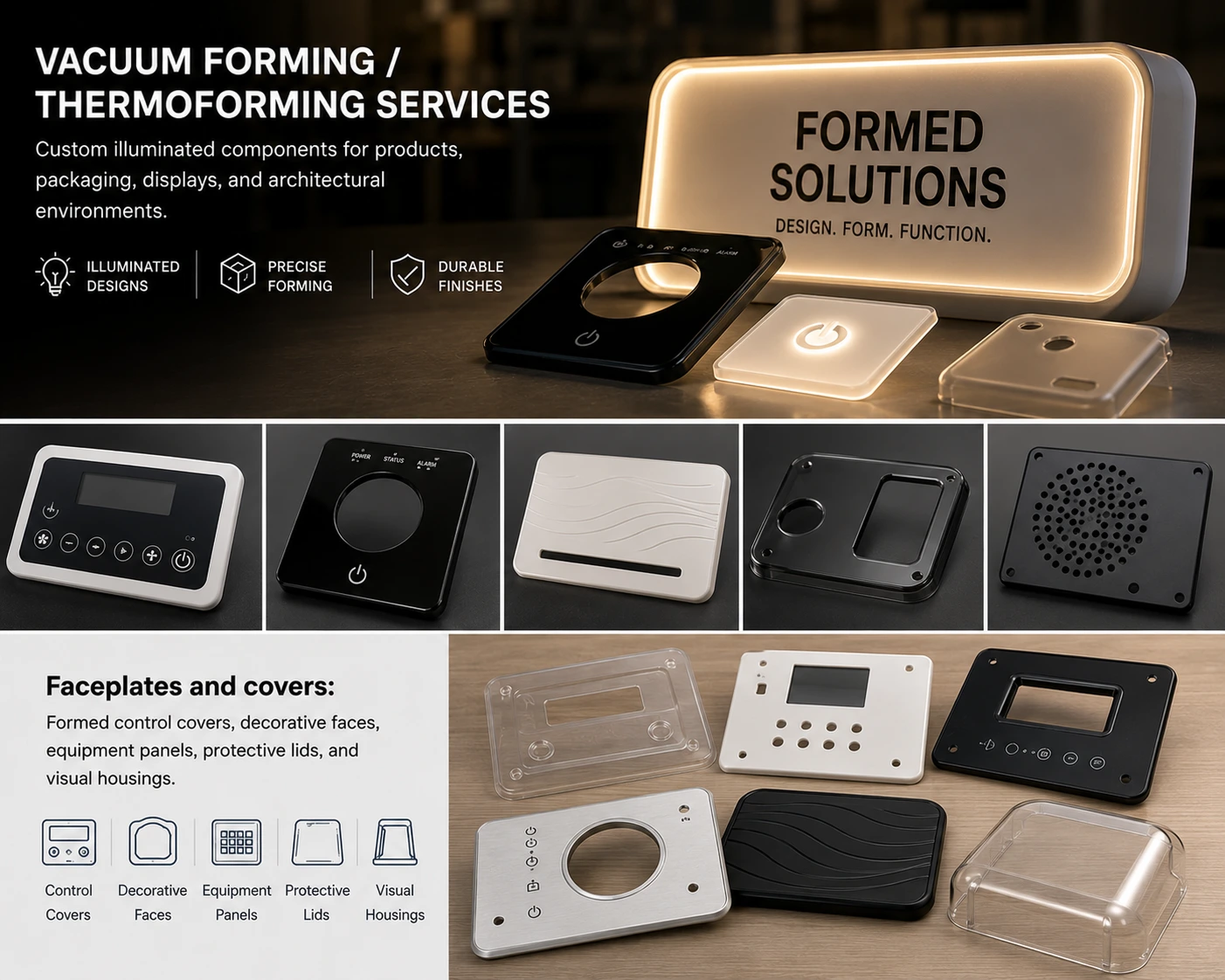
Faceplates and covers
Formed control covers, decorative faces, equipment panels, protective lids, and visual housings.

Architectural elements
Decorative wall features, molded accents, interior components, repeating forms, and lightweight panels.
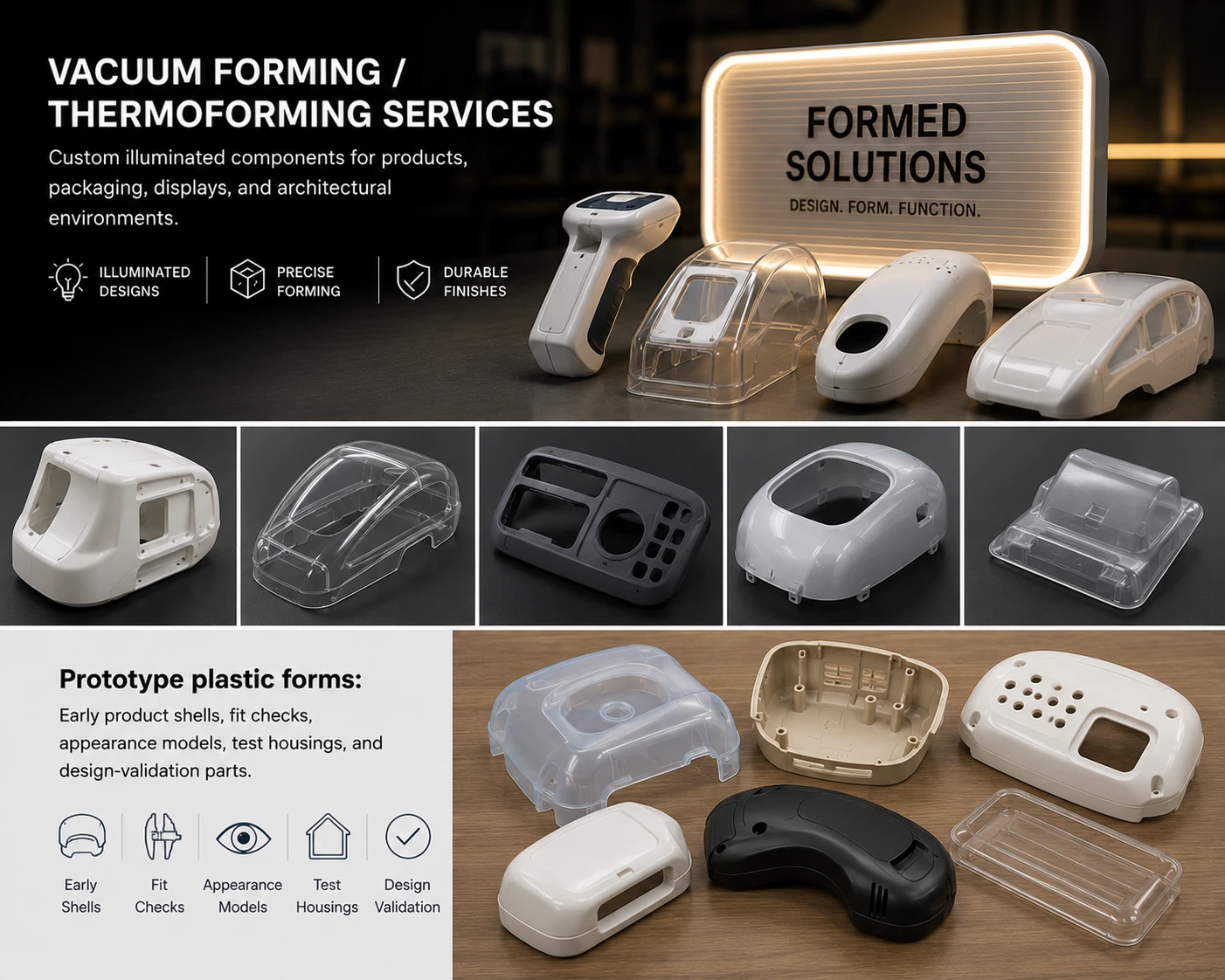
Prototype plastic forms
Early product shells, fit checks, appearance models, test housings, and design-validation parts.
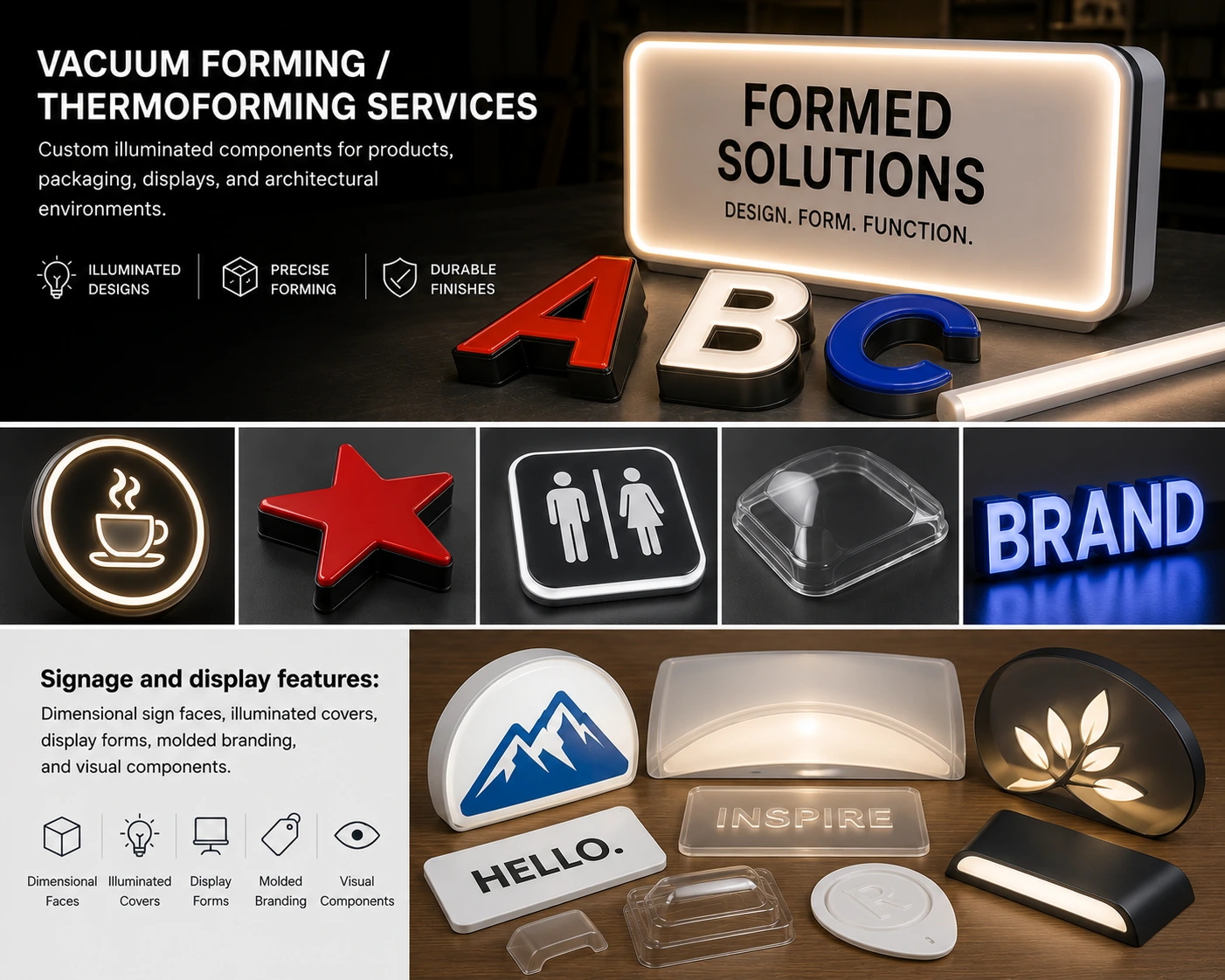
Signage and display features
Dimensional sign faces, illuminated covers, display forms, molded branding, and visual components.
Short-run production
Repeat parts where vacuum forming offers a practical bridge between prototyping and higher-volume manufacturing.
Project examples
From formed architectural panels to dimensional retail components.
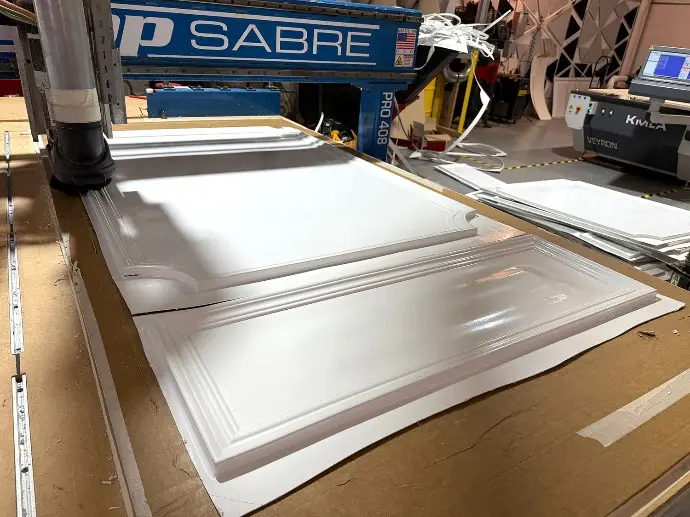
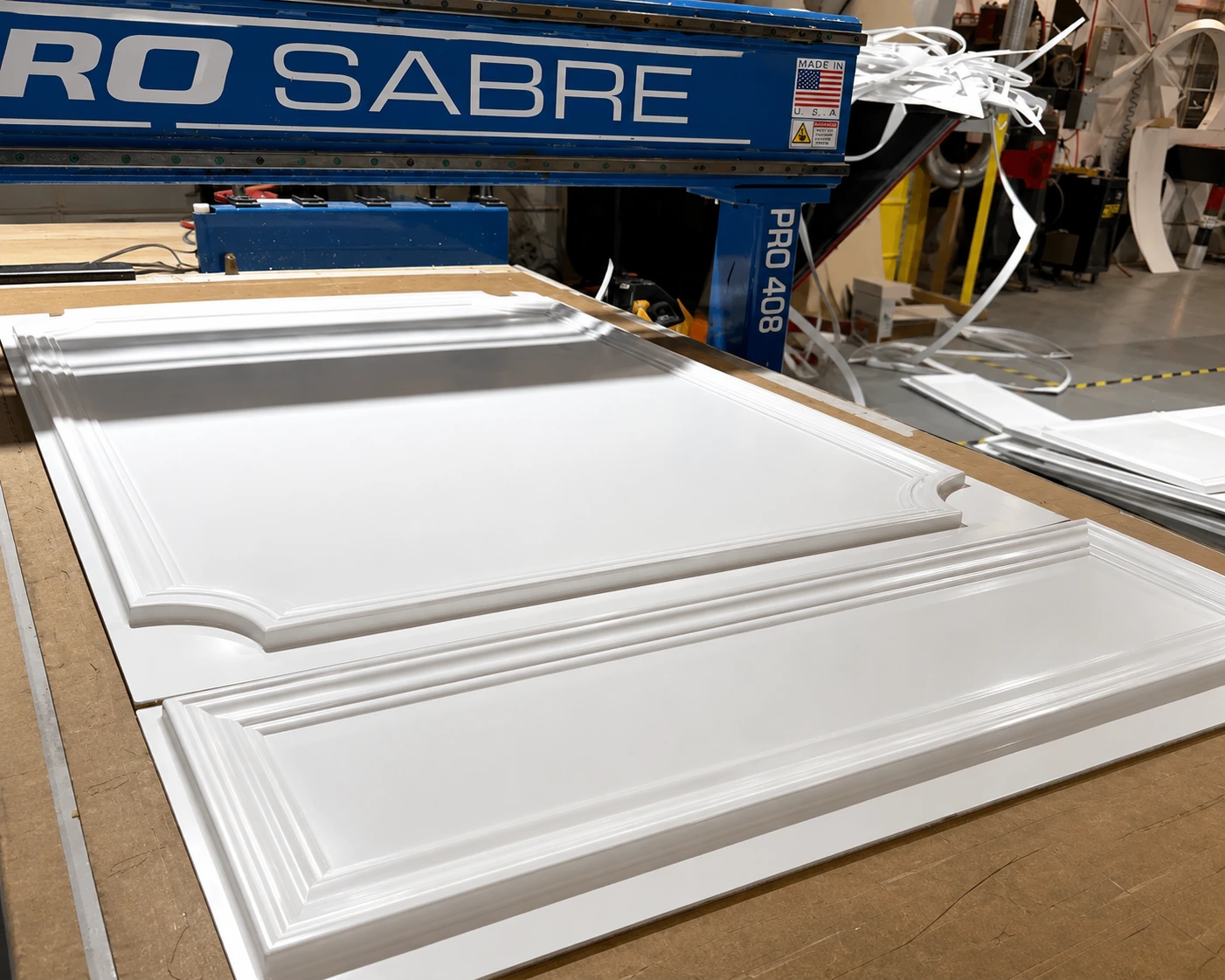
Architectural formed panels
Large decorative plastic panels with repeatable profiles, curved details, and trimmed edges.
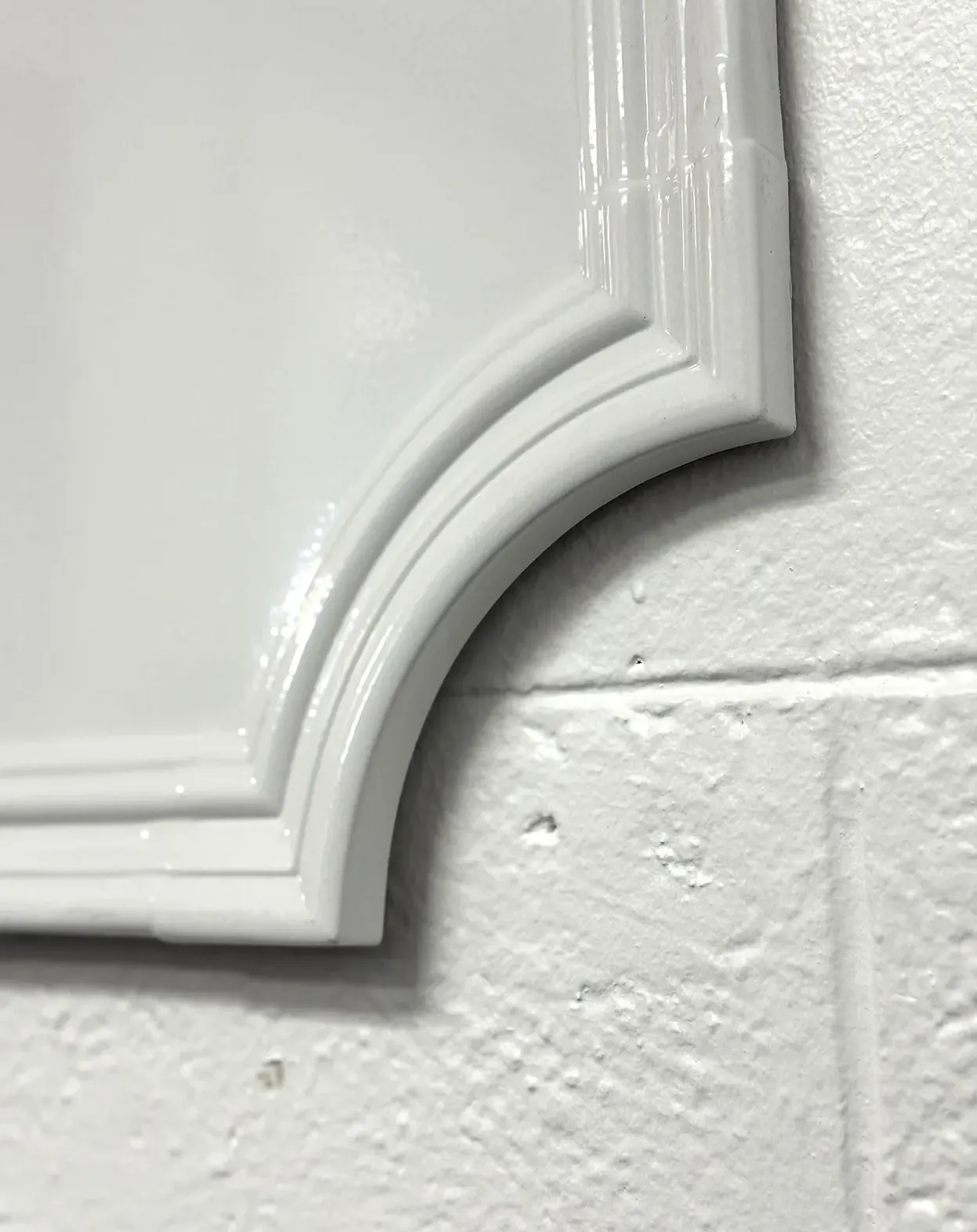
Detailed formed profiles
Smooth corners, layered contours, repeatable surface detail, and clean decorative geometry.

Retail display components
Formed decorative pieces integrated into branded window displays, seasonal installations, and visual environments.
Project workflow
A clear path from part design to trimmed, finished plastic component.
Submit the design
Send a 3D model, drawing, sample, reference photos, or early concept.
Choose the material
Confirm plastic type, color, texture, thickness, performance, and finish.
Develop the tooling
Use customer-supplied tooling or develop the mold, plug, decking, vents, and assists.
Heat and form
The sheet is heated, stretched, clamped, and drawn over the tool using vacuum.
Trim and finish
The formed part is cut, drilled, cleaned, assembled, or finished to final geometry.
Pickup or ship
Completed parts are protected and prepared for Powell pickup or nationwide shipment.
Ready to price your formed plastic part?
Send your model, dimensions, material needs, quantity, and deadline.
We will review forming geometry, tooling, draft, draw depth, material, thickness, trimming, finishing, and delivery requirements.
Part and tooling review
Material and gauge guidance
Prototype or production quantities
Vacuum forming FAQs
Common questions before requesting a thermoforming quote.
Can you form deep cavities?
Yes. Parts may be formed to depths of approximately 22 inches, depending on material, starting gauge, draw ratio, draft, tooling, corner radii, and final wall-thickness requirements.
What thickness of plastic can you form?
Sheets up to approximately one-quarter inch may be supported, depending on plastic type, tooling, part geometry, depth of draw, heating requirements, and desired finish.
Do you provide molds, plugs, or other tooling?
Yes. We can work with customer-supplied tooling or help design and fabricate molds, plugs, plug assists, decking, vents, and related tooling.
What materials can you vacuum form?
Common materials include ABS, HIPS, acrylic, PETG, PVC, Kydex, and other compatible thermoplastic sheets. Suitability depends on the project and forming requirements.
Can you trim and finish the formed parts?
Yes. Secondary work can include perimeter trimming, flange removal, CNC routing, drilling, openings, edge cleanup, assembly, and project-specific finishing.
What affects lead time?
Lead time depends on tooling, material availability, part complexity, sample approval, trimming, finishing, testing, and production quantity.
Do you offer pickup and shipping?
Yes. Completed projects can be collected from the Powell, Tennessee facility or shipped within the United States.